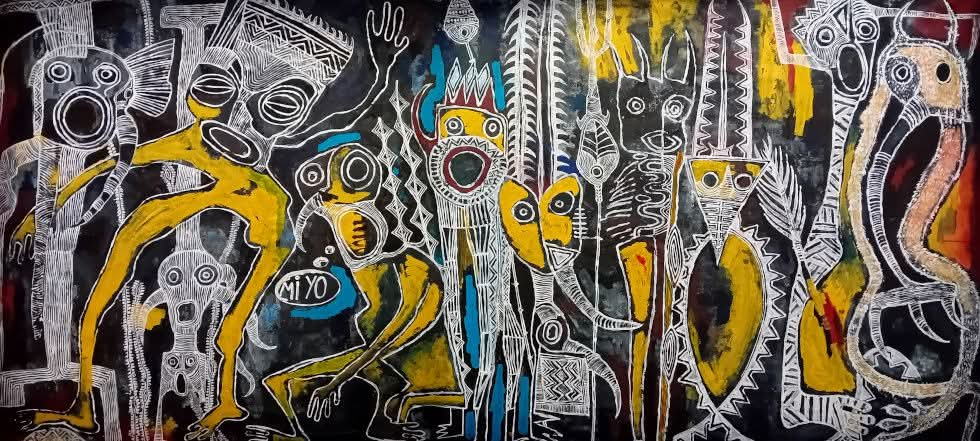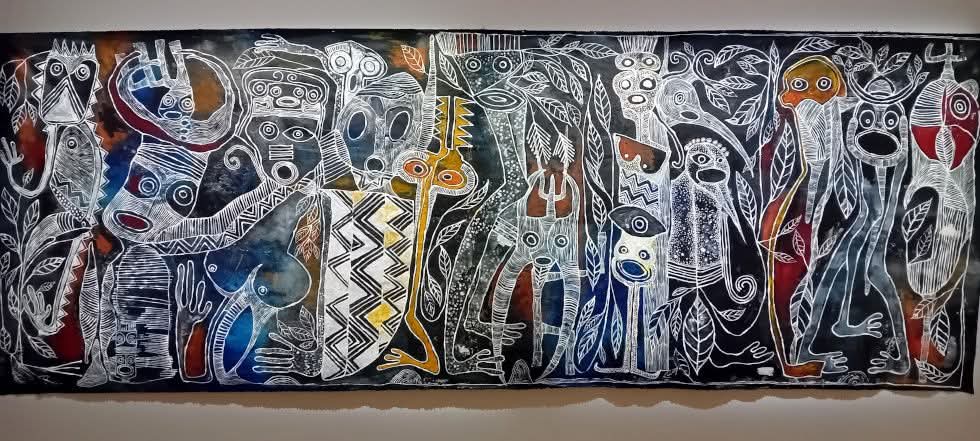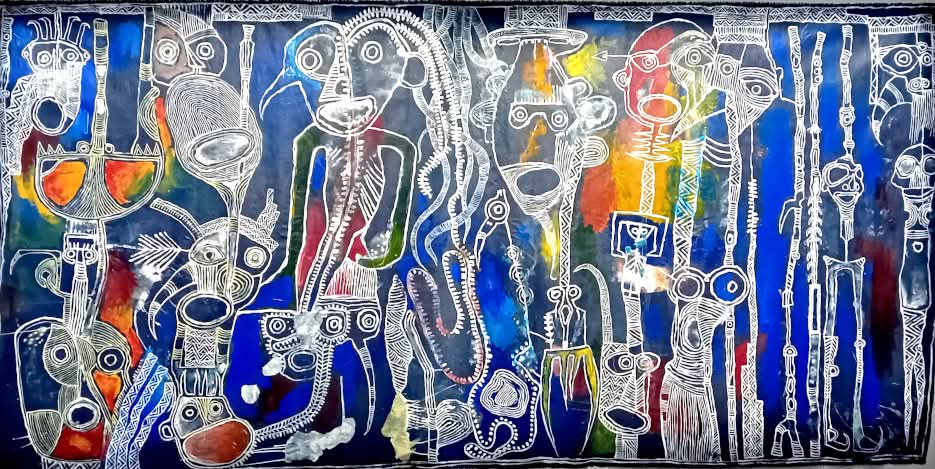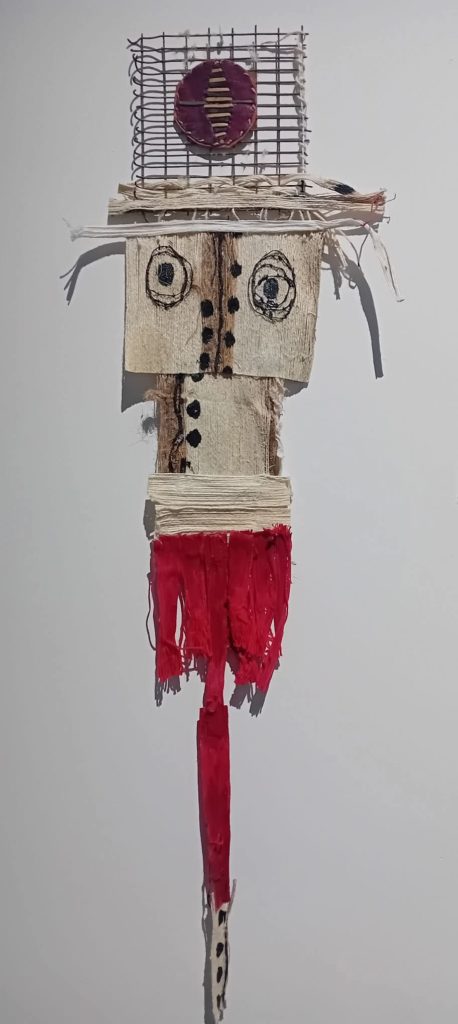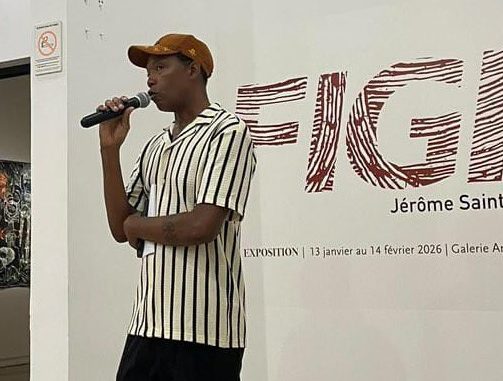
At the request of the Atrium Tropiques – Scène Nationale en Martinique, Guadeloupean artist presented around fifty works (including several monumental pieces) to the audience in an exhibition entitled “Figi” from January 13 to February 14, 2026. Kariculture met with Jérôme Sainte-Luce before the end of the exhibition.
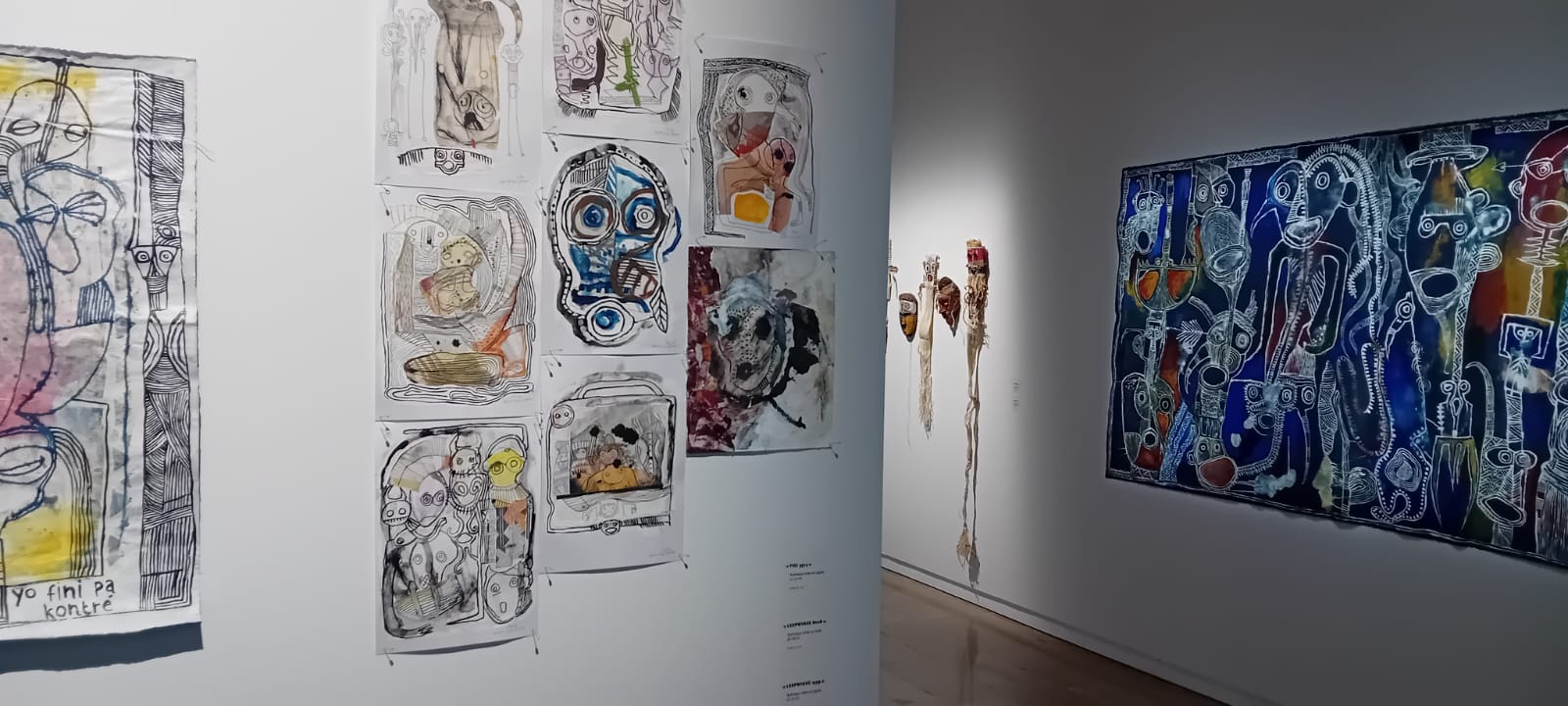
Kariculture: This is the first time you are exhibiting at the Atrium Tropiques – Scène Nationale in Martinique, how did the management of this prestigious venue select you? Do you consider this is a great progression in your artistic career?
Jérôme Sainte-Luce: No, this is not the first time I have exhibited at the Atrium, I have already exhibited there collectively, but this is my first solo exhibition. The selection of works for this exhibition was based on the narrative of the graphics, what I want to tell, and the dynamics of the works in space. For this exhibition, the selection was not particularly difficult since my message was already clearly identified. This exhibition project is another step forward in my artistic career.
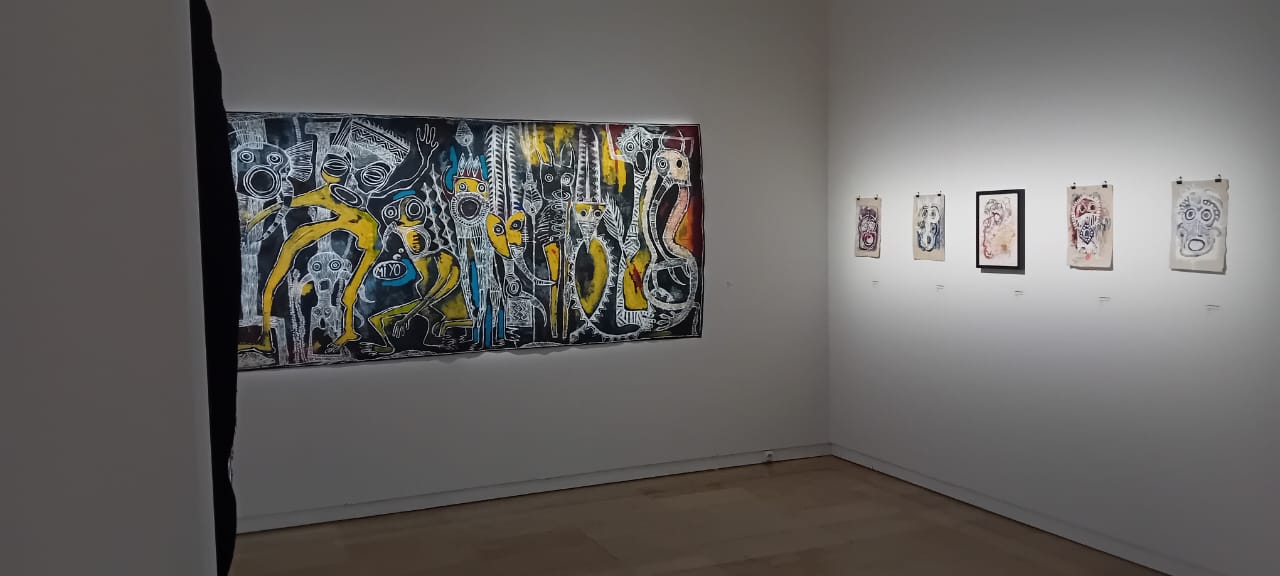
Kariculture: Your exhibition is entitled “Figi” (Face), why this title? It is composed, among other things, of monumental works, and the colors are sometimes bright. Why these choices?
J.S-L.: The “Figi” exhibition is an extension of my artistic approach, which draws its narrative from the Amerindian graphic universe, where the relationship between man/animal and nature is one of the gateways to the imagination, which leads to tirelessly exploring an inner self. The urgent, instinctive, and raw gestures, as if suspended in space, are here, like incantations, switches to awaken memories, to resurrect faces, “Figi”, Presences. Graphics as a medium lead to places where the past dances with the present in a singularity that is both spatial and temporal, visible and invisible in the heritage of Martinique and Guadeloupe. How by the power of lines and voids identities are drawn? How do traces communicate and bring different cultures together? How does through these lines, these faces build a whole story? Like a sacred wandering that pushes your gaze to focus on faces and feel a story… This exhibition is intended as a tale in which lines, rhythm after rhythm, movement after movement, bring back to life creatures from a familiar past/present, presences from my memory against forgetting to tell us “Remember!”.
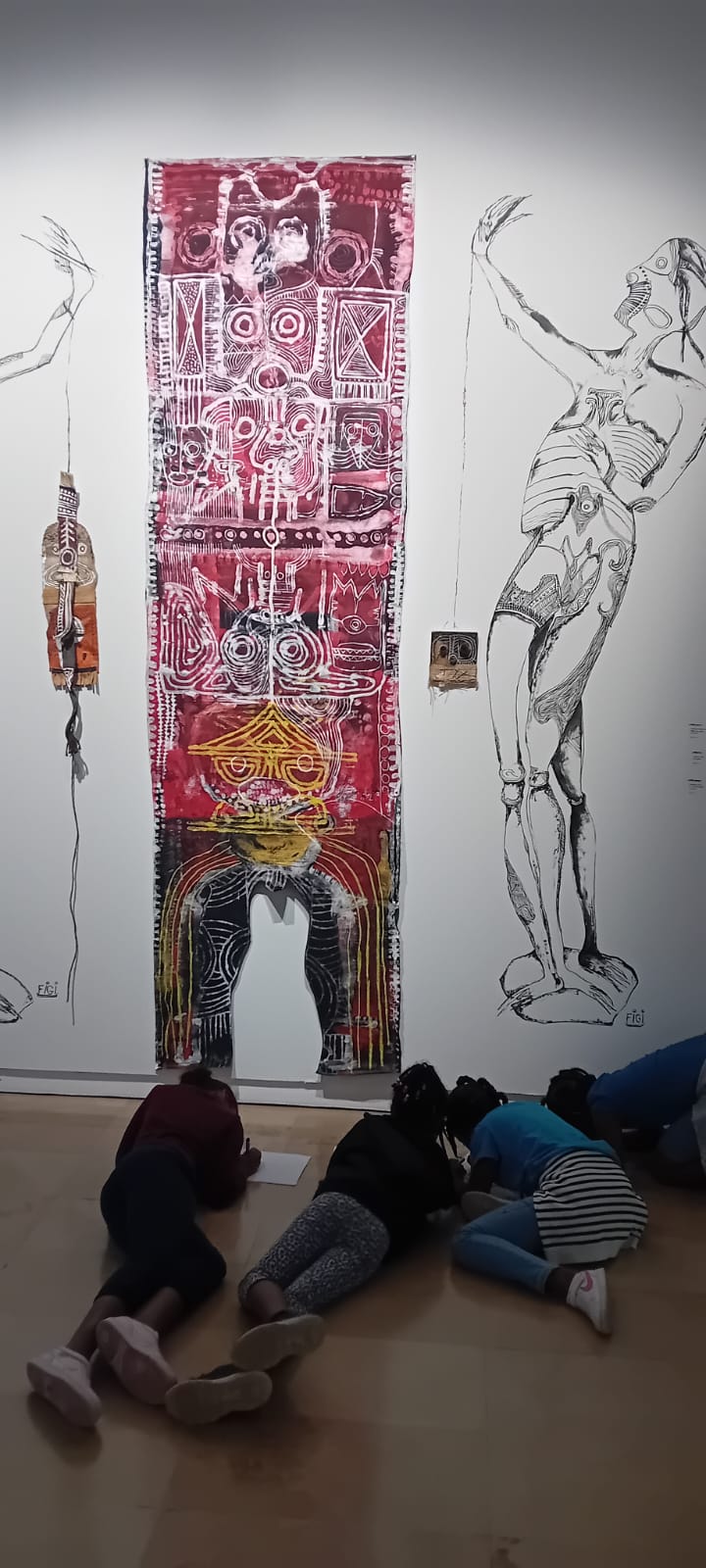
Kariculture: You live in Trois-Rivières in Guadeloupe, an “Amerindian city” with its Parc des Roches gravées (Engraved Rock Park). Why is it important for you to raise awareness of the presence of these first peoples in our archipelago and throughout the Caribbean through your work?
J.S-L.: I have taken the stance of talking about my immediate surroundings, in my case, Trois-Rivières with its history and more particularly its archaeological dimension (the Amerindians), which inspires me in my visual production. It’s a way for me to explore Guadeloupe, Martinique, and more broadly, the Caribbean.